

By Rick Creamer
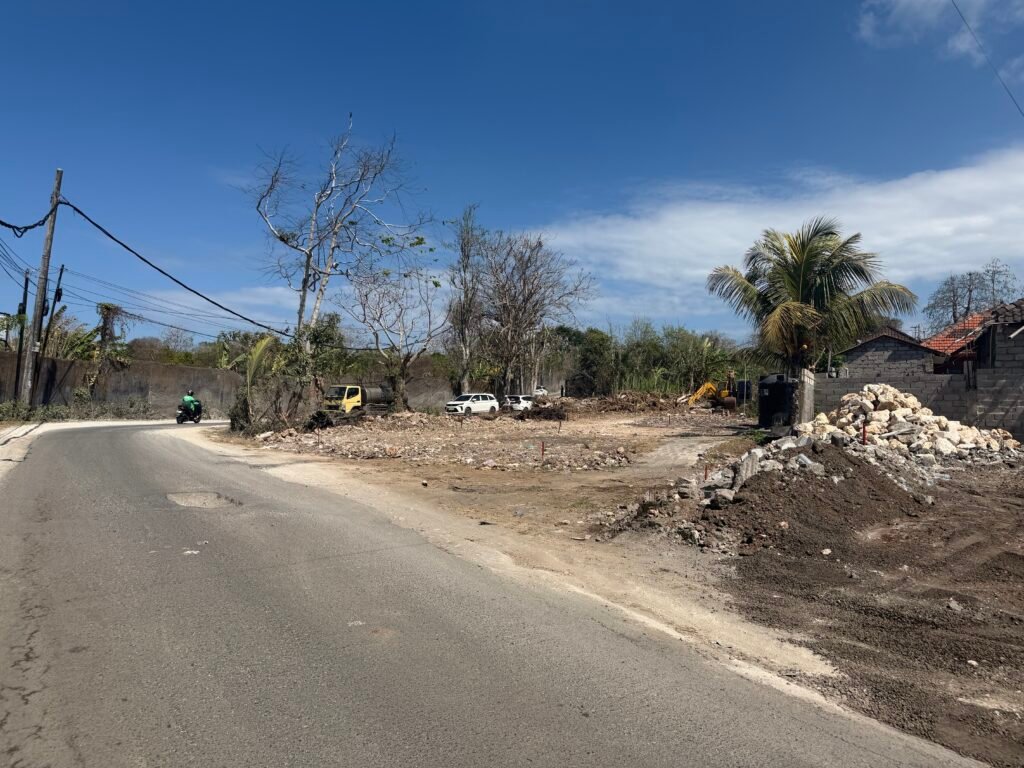
I am currently spending some time in Uluwatu as I never get down here. Living in the Legian-Seminyak bubble, you tend to forget there are other amazing places in Bali as everything you need is right there. There’s that, and then there is the traffic to get to other places. It is widely known that the traffic in Bali is horrible and only seems to be getting worse. I don’t want to sound dramatic, but I can’t help but think Uluwatu is, in fact, doomed. Allow me to explain.
Uluwatu (let’s call it Ulu) is located in the south of Bali. On the map, Ulu is the little part of land that looks like a separate island that is connected by a land bridge. You have probably been here, and if you are a surfer, you know it well.
Let’s start from the start, shall we? Just getting here was an adventure. On the bike, it took me 1 hour and 10 minutes to get the 17 km from my apartment in Legian to the hotel I am staying at. I followed Google Maps, and that was a disaster. I thought it would get me here quickly, but it was a shambles, to say the least. The journey here took me through Jimbaran, up some back streets, up the hills, back again, all the while being stuck behind trucks with exhaust fumes pouring out (those same trucks that are helping to build the destruction that is coming for Ulu). It just felt like such a slog and made me understand once again why you tend not to travel far from your home base.
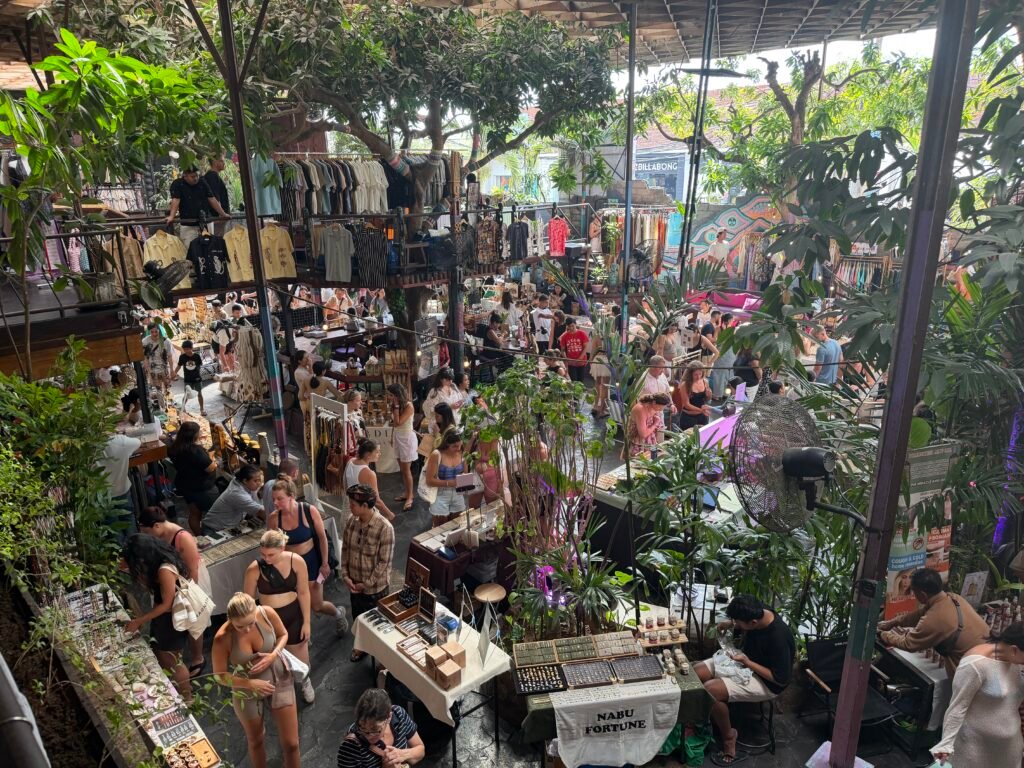
The journey aside, I got in late and it was dinner time. We had a booking at a Greek restaurant called Alvi, a social media favourite, which also ended up being a disappointment. But that is another story for another time. However, the restaurant scene seems to be booming… full of European expats, holidaymakers and what looked like the start of the migration of Cangguians searching for the next cool place to be. And Ulu definitely has that cool vibe starting to rear its head. Why do I say cool? The venues are stunning, but the people are beautiful in these places. I’m talking European supermodels. Male, female and everything in between. People you would see on magazine covers just sitting all around you eating European-inspired cuisine at a fraction of the cost of the equivalent venues in Europe. (Cough, cough… did someone say neo-colonialism?) So where is the doom and gloom, Rick, I hear you ask… it’s coming, don’t worry.
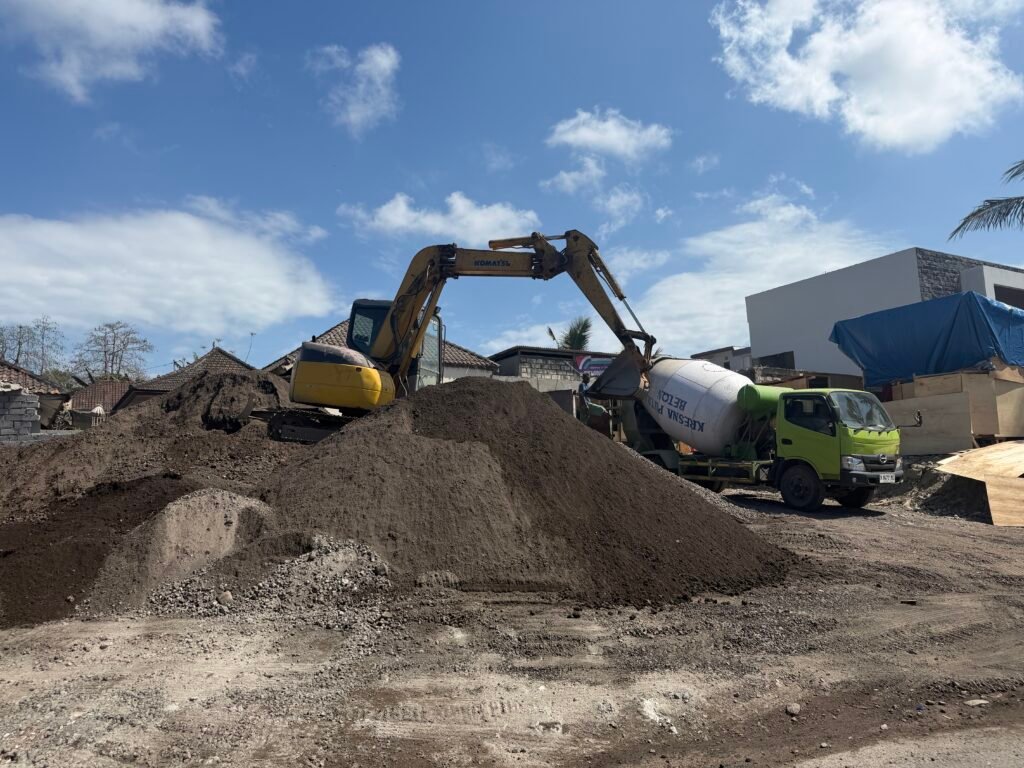
My hotel is located 2 km from Savaya. Do you know it? If you don’t, look it up. Again, another story for another time. As you drive around the area of Savaya, you are head-butted by the development that is currently in progress. I am talking massive complexes with 20 villas being built along these small roads. I mention the small roads as this is what happened in Canggu/Berawa. The roads and infrastructure are not designed to have this amount of traffic, let alone trucks, flying along day after day. I haven’t explored Ulu in 15+ years, and perhaps it has been a gradual development over time, but on the one street I rode down, I counted more than 50 construction sites, with more land cleared and other parts for sale.
Let’s have a quick look at Uluwatu so we can get a clearer picture of what is actually happening across the region. For the most useful snapshot, I’m defining the Uluwatu market as Pecatu, Bingin, Padang Padang/Labuan Sait and the adjoining Ungasan and Melasti tourism strip.
Using information and listings that are publicly available online, the scale of development is significant. Across the broader area, there appear to be around 180–250 restaurants and cafés heavily targeting tourists and expats, roughly 70–100 conventional hotels and resorts, and potentially 700–1,000 or more villa accommodation properties. When individual villas inside larger developments are counted, the total physical villa stock could already be well above 1,000 units.
Construction is much harder to measure because there is no single public live register showing every villa currently being built. However, based on publicly advertised developments, property listings, construction activity and local reporting, a reasonable estimate is that 150–300 additional villa units could currently be under construction across the broader Uluwatu tourism belt.
There are also now around 12–16 significant beach clubs, cliff clubs and day clubs operating across Uluwatu, Pecatu, Ungasan and Melasti. At the same time, the officially registered population of Pecatu itself appears to sit at only around 9,000–10,000 people. The true number of people living and working in the area is considerably higher once Indonesian workers, construction crews, long-term foreign residents and tourists are included. There is no reliable public count of expats living specifically in Uluwatu, but several thousand foreigners may now be residing across the broader area at any given time.
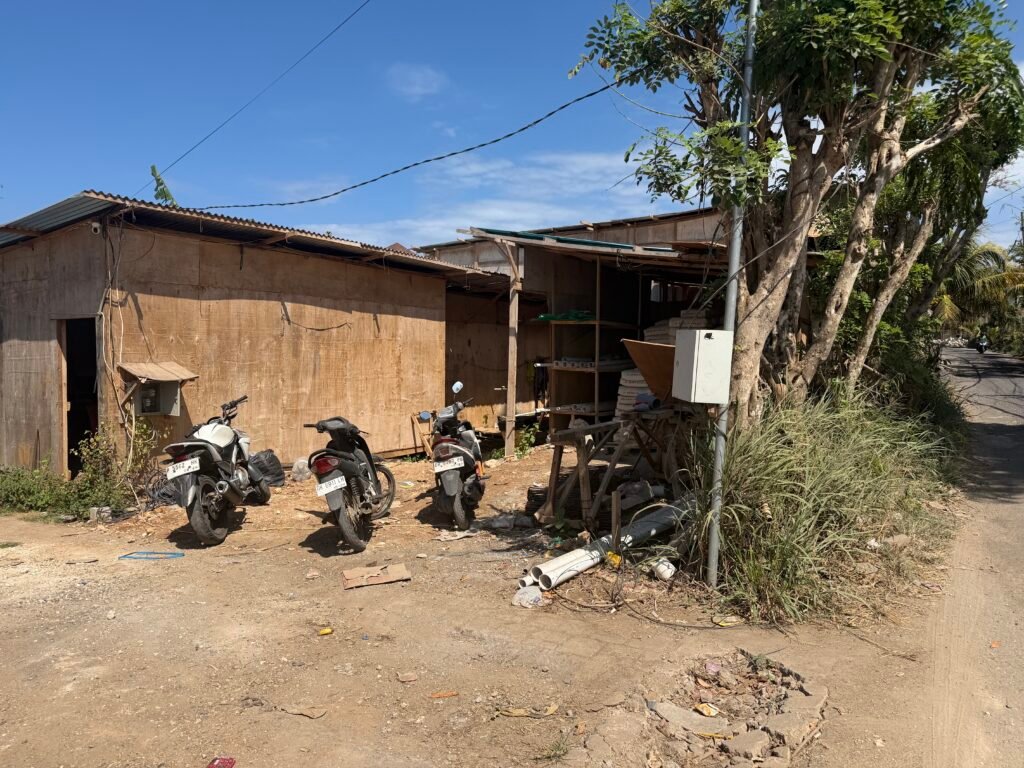
Then there is the traffic. There is no publicly available figure showing exactly how many construction trucks are operating in Uluwatu each day, so any exact number would be misleading. What is clear from local government announcements and public reporting is that construction vehicles, material trucks and growing traffic volumes have become a significant enough issue for authorities to introduce traffic changes and expand road infrastructure around Pecatu.
These figures are not perfect, and they shouldn’t be presented as an official census. They are a snapshot built from information publicly available online, including government data, accommodation platforms, restaurant listings, property developments and local news reports. But taken together, they show just how quickly Uluwatu has changed — and why the question of whether its infrastructure can keep up with that growth is becoming increasingly important.
Did someone say trash? Not yet. I haven’t even spoken about the trash problem that I feel is going to get worse and worse before it gets better. All these new developments and new restaurants… what are they planning to do with their trash? Where is the trash going? How is it being managed? The Bali government has implemented some new regulations around trash, but is it enough? That is for the experts to discuss, but a discussion, and most importantly, action, needs to happen.
Now for the elephant on the island… Water… And I am not talking about Aqua. The water problem in Uluwatu isn’t theoretical. Badung’s own government acknowledged as far back as 2023 that rapid development in Pecatu and Ungasan had outgrown the available clean-water infrastructure. Researchers at Udayana University have since documented continuing supply problems in Ungasan, where some residents remain dependent on water tankers. Meanwhile, groundwater extraction across southern Bali is coming under increasing scrutiny, with scientifically documented seawater intrusion already occurring in heavily developed parts of Badung. There is currently no publicly available figure showing how many wells are operating beneath Pecatu and Ungasan or exactly how much groundwater is being removed each day. And that may be the most concerning part — we can count the villas being built above ground, but it’s much harder to know what is happening to the water underneath them.
Who is responsible for this and what can be done? I don’t think there is one single villain in this story. I can’t help but wonder if the responsibility actually lies within a thousand rational decisions that collectively have landed Ulu in this horrible predicament. We know there is a demand for plots of land by every man and his dog on the Island of the Gods. Just one look at Instagram will show you the demand for Bali property. Furthermore, we know that selling land to foreign investors can provide life-changing money to Balinese landowners. We also know there seems to be a massive demand for Bali, not only as a tourism destination but also as a place to relocate as more and more people shift to remote working.
So I ask you again… is Uluwatu doomed? I’ll let you make your own decision, my concern is the window to stop it becoming another Canggu is closing.